Friday, October 9, 2009

FlashForward: A Murder to Thank

I was a little disappointed by most of last night's episode, but it picked up steam near the end.  The part about the crows dying was really creepy.  I actually don't think it relates to the pole-shift theories.  For one thing, as we've discussed, a pole shift would be immediately obvious to anyone with a compass or GPS.  For another, it wouldn't explain the localized crow deaths in Ganwar, Somalia. 

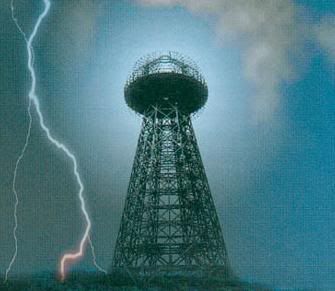
But such speculations are on the right track insofar as they focus on electro- and geomagnetic forces.  I suspect who or whatever caused the blackout was inspired by  Nikola Tesla, whose scientific discoveries formed the basis of modern MRI technology. Tesla claimed to have discovered a new type of longitudinal (as opposed to transverse) scalar electromagnetic wave.  He built an enormous tower on Long Island called Wardenclyffe, which he hoped would wirelessly transmit electricity to a receiving tower across the Atlantic.


Unfortunately, Wardenclyffe was never completed.  Late in life, Tesla further claimed to have unified the fields in a dynamic theory of gravity. He never published his claims but they nonetheless spawned an entire pseudo-science called electrogravitics. Proponents believe that gravity is really the force of longitudinal electromagnetic waves affecting space-time in the fourth dimension.  My hunch, as stated in a previous post, is that the blackouts are a side effect of someone using this (pseudo) science to time travel or affect probability.


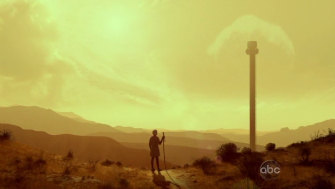
I think the kid saw a Tesla tower in Somalia --  my first thought was of the Prestige.  Anyone know if Ganwar is a highly geomagnetic location like Colorado Springs, where Tesla built his lab?  As always, you're welcome to post anonymously, but please identify yourself somehow, so I can distinguish between anonymous posters. Thanks!

Wednesday, October 7, 2009

Bored to Death: Brotherhood of the Traveling Coat

In Marcel Proust's masterpiece, In Search of Lost Time, a madeleine cookie triggers a wave of involuntary nostalgia in the narrator.  For me, it was the coat Jason Schwartzman wore in a recent episode of the entertaining new HBO series, Bored to Death.


I was transported to my time after college, when I lived and worked in Washington, DC.  It was the kind of group living situation that's so common in the District.  A random assortment of strangers -- besides me, there was the professional juggler, his girlfriend the trapeze artist, Ralph Nader's beleaguered administrative assistant, and the private investigator -- all sharing an enormous row house in Adams Morgan.

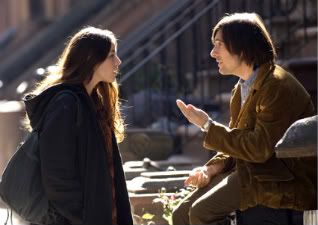
We threw the best parties with kegs of good beer, food the PI made from scratch, and plenty of room to dance.  After one of these fetes, someone left behind a corduroy coat identical to the one Schwartzman's wearing in the picture.  It sat in our closet for a month or two, while we waited for the owner to retrieve it.  When nobody did, I claimed the coat over the objections of the AA, who coveted it himself but was just too short to wear it well.  Or so I insisted.

I took the coat when I moved to Cambridge, MA, where it completed my daily ensemble of blue jeans, black turtleneck, and Vasque boots.  I can still remember the reassuringly large buttons.  The tricky pocket with a hole that allowed small objects like pens and change to fall into the lining like vents in a car.  The compliments it elicited -- one woman (sadly, not Olivia Thirlby) said I looked like a sexy acoustic rocker in that coat.

My ownership ended some time after moving to New York, NY.  I remember losing several of the buttons and finally trading the coat in for something sleeker and blacker -- this was, after all, New York. Beyond that, I can't recall its final disposition.  But I'd like to think someone else -- maybe even Schwartzman himself -- recognized the coat's hipster appeal and rescued it for Bored to Death.

Speaking of which, I should probably say a word about the show.  The highlight for me thus far is clearly the chemistry between Schwartzman and Ted Danson.  Schwartzman, who can sometimes be too smarmy and precocious, strikes the right notes here as a struggling writer turned detective with a weakness for white wine and pot.  And Danson is flat out brilliant as his bored rich boss who keeps finding excuses to make Schwartzman come over and smoke him out. 

The adorable Thirlby, who plays Schwartzman's ex, has yet to be given much to do.  Same with scruffy Zach Galifianakis, who plays Schwartzman's best friend.  Still, the show is well written with a nucleus of talented actors and some inspired guest stars (e.g., director Jim Jarmusch).  Plus, Schwartzman's a brother of the traveling coat.  Will Bored to Death be a success?  Like a magic eight-ball, I say all signs point to yes.

As always, you're welcome to post anonymously, but please identify yourself somehow, so I can distinguish between anonymous posters. Thanks!

Monday, October 5, 2009

FlashForward: Was the Blackout Planned?

Let me preface this by saying I agree the blackout was a planned event.  But I've noticed some confusion about an interesting point I thought was made in White to Play.  When the Assistant Secretary of Homeland Security debates with the FBI whether the event was planned, an FBI agent argues that it was because the probability of it happening at the top of the hour is 1/3600.  Demetri counters that natural events randomly coincide with the top of the hour all the time.  The Assistant secretary agrees with Demetri, but is eventually swayed by the existence of Suspect Zero.

I thought the message of this exchange was clear: there's no statistical reason to think the blackout was planned.  That's "all supposition," as the Assistant Secretary puts it.  Suspect Zero's behavior -- particularly the cell phone chatter -- is a different story, which is why the Assistant Secretary changes her tune upon learning of him.  Indeed, I remember thinking the agent's statistical argument was flawed and gave the writers credit for addressing what might otherwise have been criticized as a goof.

Many, however, interpret the scene quite differently.  They insist the statistical argument is sound and offer the following rationale.  The top of the hour is a marker of great significance to humans.  The chance of the blackout happening at this moment of significance is 1/3600 (i.e., 60 seconds X 60 minutes) as compared to a much higher 3599/3600 probability of the event transpiring at a moment of insignificance to humanity.  Ergo, the event was most likely planned.  Someone please correct me if I'm wrong, but I think that's fallacious reasoning.

The problem is that the chance of the event occurring at any given second during the hour is 1/3600.  There's always a 3599/3600 probability the event will occur at some other second during the hour.  The only reason our minds notice this particular 1/3600 possibility out of the rest is that we attribute social significance to the top of the hour.  It's a mistake people make all the time -- e.g., when numerologists connect important world events with the number 11, or sports fans insist certain players are "clutch" in the postseason.

What do you all everybody think?  Like I said, I'm wide open to being corrected on this one, if I'm wrong.

Update: October 5, 2009

It occurs to me there's a better reason to suspect the blackout was planned. Planned events occur so often at the top of the hour that events of unspecified origin coinciding with that time have a greater chance of being planned than they otherwise would. It's a bit like why you always seem to end up in the longest line at the supermarket or the slowest lane on the highway. The more people who fall into a given category, the more likely you are to be among them yourself.  The argument is a variation of the Copernican principle, which distinguishes it from fallacies like the power of 11 or "clutch" performance.

To summarize, therefore, the blackout may well have been planned, but a natural explanation is still more likely and the 1/3600 vs. 3599/3600 argument is totally bunk.  As always, you're welcome to post anonymously, but please identify yourself somehow, so I can distinguish between anonymous posters. Thanks!

Saturday, October 3, 2009

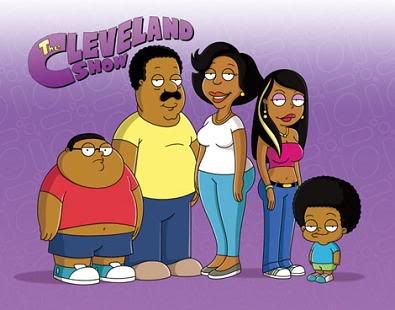
The Cleveland Show Does Not Rock...

Ever since FOX announced the Cleveland Show, I've wondered why, out of all the characters on Family Guy, they picked Cleveland for a spin-off. Perhaps I'm in the minority, but I never found him remotely funny. I felt like Quagmire or Brian would have made much better choices.


No surprise, therefore, that I found the Cleveland Show similarly unfunny. After watching the pilot, though, I wonder if that's the point. Maybe Seth MacFarlane was being conservative and deliberately chose a weak character to limit the damage to Family Guy. The loss of a Quagmire or Brian could have been crippling to his flagship show. Cleveland, far less so.

The choice of Rich Appel to head the project also seems conservative. Appel has written and produced for some impressive shows, including the Simpsons, Family Guy, and Bernie Mac. But he has a reputation for playing it safe, which is death for a racial comedy. Such humor is inherently high risk, high reward. You can't be afraid to offend, or you get lame jokes -- like a wigger boyfriend named Federline Jones -- that offend anyway by virtue of their banality.

If there's a silver lining, it's the way the Cleveland Show has enhanced my appreciation for Family Guy. In a previous post, I dismissed the voice work on the latter, arguing it was the referential humor that really elevated Family Guy. In retrospect, I took that quality work for granted. The Cleveland Show has plenty of cutaways, too -- the Parton family gag was one of the few laugh-out-loud moments of the pilot for me. But the show still stinks because the character voices are so weak, particularly for step-brothers Rollo and Cleveland, Jr.

It's like they're not even trying, which raises one last possibility to contemplate. Some of MacFarlane's die-hard fans, the ones who insist his genius can produce no dud, claim that the Cleveland Show is deliberately cliched and awful. It's supposedly a satire of spin-offs, sort of like how the film Adaptation ends with a satire of bad action movie cliches. They claim the secret goal is for the show to be canceled quickly like Joey and other failed spin-offs of the past.

I guess that's possible...but I doubt it. I think MacFarlane got gun shy and sought to minimize his losses.  The result was this turd of a show.

Friday, October 2, 2009

Yes, I Have...

David Letterman's shocking revelation last night should be mandatory viewing for politicians and entertainers caught with their pants down:


Looks like Dave has learned a thing or two from Howard Stern over the years, because this was by far the most brilliant and honest live television I've seen in some time.

Tuesday, September 29, 2009

The Three Fs: FlashForward and Fringe

I was frankly skeptical when I heard that Executive Producer Marc Guggenheim had raved on Facebook about the FlashForward pilot. After all, Guggenheim was a creator of the earnest but mediocre Eli Stone, which had a great premise but poor execution. I'd also read Robert Sawyer's book Flashforward and seriously doubted the premise would translate to television.

I'm happy to report my skepticism was totally misplaced.

In fact, after watching the first episode, I wouldn't be surprised if I enjoy the show even more than the book. Sawyer's novel is less of a mystery -- the source of the blackout is revealed early on -- and more of a character study of the scientists who caused the event. Also, the flash forward therein catapults human consciousness 21 years into the future, instead of a mere six months. Obviously, these elements wouldn't make for much of a weekly show.

So, the TV version wisely changes things, making the cause of the flashforward a mystery and focusing upon FBI agents trying to piece together what happened. Indeed, while the pseudo-scientific premise -- particle accelerator malfunction -- may remain the same, the motive and identity of those responsible will probably be very different. My guess is that some sinister corporation has been experimenting with such an accelerator to time travel or affect probability.

The shorter jump makes sense, too, though I would have made it a full year. Six months is an awfully compressed time frame. Mark's vision of the Mosaic investigation and men with laser-sighted guns will probably occur in the first season finale. But such a major reveal should really take place later in the series, like season two or three. What I don't want is for the show to start each season with a similar flash that sets up the storylines for the year.

Still, that's a minor and speculative quibble. As I say, there's plenty to love about this show, including top notch writing and acting. Brannon Braga wrote "Cause and Effect," a classic Star Trek: TNG episode that takes a cool and unconventional approach to time travel. And David S. Goyer penned "The Dark Knight," one of my favorite films of any genre, ever. I'm less familiar with Guggenheim's work (besides Eli Stone) but know he has plenty of fans, too.

Jospeh Fiennes and Sonya Walger are both totally believable as husband and wife Mark and Olivia Benford. John Cho is also great as Mark's partner Demetri Noh, who doesn't have a vision and assumes it's because he'll be dead in six months. I buy Courtney B. Vance as their dapper and baritone FBI superior. Even Family Guy creator Seth MacFarlane is solid in his cameo as an agent on their team, though my first reaction was: "this guy's getting a little overexposed."

For some time now, ABC has looked in vain for the "next" LOST. Time will tell, but I think they may finally have found it in FlashForward.

***
Great shows usually grab me from the very start. I knew I would enjoy the Wire, Dexter, and Battlestar Galactica after the first episode or two. I was sold on LOST after the first promos. (Plane crashes are a major fear of mine.) In the case of Fringe, it took me a full season to fall in love.

I originally panned the show as too derivative of the X-Files, but you all everybody urged me to give it another chance. So I caught up on Hulu in time to watch the mind blowing season finale. And I'm not talking about Leonard Nimoy's freaky guest spot as the elusive William Bell, or the revelation that Pacey is from an alternate reality (which I already suspected). When they pulled back to reveal the twin towers of the World Trade Center...

Let's just say, as someone who was in Southern Manhattan and saw the towers fall with my own eyes, it was a powerful and disturbing image. It also illustrated brilliantly, on both literal and metaphorical levels, the mythology of the show. There is more than one of everything, including an alternate reality that differs in important ways from our own. One lingering question from the finale: are the towers standing because 9/11 never happened or is the alternate reality behind our own in time?

My casting concerns were overblown in retrospect. Pacey is more palatable than I'd imagined. And the writers have wisely toned down Lance Reddick's character, Agent Broyles, making him the quietly authoritative figure Reddick played so well on the Wire. Anna Torv is as adorable as ever -- I love Agent Dunham's bemused look when people try to BS her. Walter Bishop continues to be the most compelling character on the show, though the mysterious Nina Sharp is giving him a run for his money.

This season has gotten off to a slow start with stories returning to the show's X-Files roots. The possession of Agent Francis is an intriguing development. But his method of communicating with the mirror universe is a little cheesy. It would be creepier -- and make more sense -- if we could actually see another pair of hands typing in the mirror. I'm confident, however, that the show will regain steam once the focus returns to the engrossing main story arc.

Right now, my guess is that the two realities are unstable and destined eventually to merge into one. The coming battle is between "living receivers" (to borrow a phrase from Donnie Darko) like Agent Dunham whose special talents will facilitate the merging process. The winners of this inter-dimensional conflict will decide which version survives when alternate realities collide.
Tuesday, June 2, 2009

Breaking Bad: One Watery Deuce of a Finale

Tragedy struck in the skies over Albuquerque, New Mexico on Sunday. One of the best shows on television is missing and feared dead after a mid-air collision with the willing suspension of disbelief. The resulting fireball of absurdity was seen by people nationwide who tuned in expecting some compelling resolution to the mystery of the burned pink teddy bear.

Reports of frustrated viewers cursing at their televisions have been pouring in from across the country. Creator Vince Gilligan had this mildly pretentious comment on the tragedy:
In that moment, at the end of season two, [Walt] doesn't realize it, but he's responsible for the whole world figuratively coming to an end around him. It's not deus ex machina, there's another term we were talking about, Lucifer ex machina, "Devil from the machine" -- it's the opposite. It almost could feel kind of random, but it's not. It's a butterfly effect. All these gears have been turning, this particular outcome was stuff Walt put into motion a long time ago by choosing to cook crystal meth.
The butterfly effect?

Lucifer ex machina?

Pardon my Colonial, Vince, but are you frakkin' kidding me?

I get what you were trying to do. You wanted to show that Walt's actions have horribly unpredictable consequences, but in a way that didn't resort to cliches. The problem is that you set up a very compelling mystery with those teasing shots of the aforementioned pink bear and the body bags in the driveway at the start of several episodes. A lot of us spent the whole season puzzling over what could have burned the bear and who those bodies might be.

To satisfy me, the answers needed to be more than just surprising. They also had to be firmly rooted in events from this past season. We should have been able to rewatch the last 13 episodes and see old ocurrences in a new light. The shocking revelations in M. Night Shyamalan's best films like Unbreakable and the Sixth Sense work because they're clear in retrospect. Breaking Bad's twist was too random -- like learning the aliens in Signs are susceptible to water.

I don't even recall anyone mentioning that John Delancey's character worked in the airline industry. Still worse, his accident felt like some bad parody of those anti-drug commercials from the '80s with the eggs. This is drugs. This is your brain on drugs. This is the air-traffic controller who will cause a catastrophic accident between two passenger planes because his daughter died from an overdose of fried eggs...er, drugs.

The unforeseen evil of Walt's drug dealing could have been depicted just as disturbingly on a smaller scale. Remember how Jane's dad always attended recovery meetings with her? It seemed like the behavior of a protective father. But what if it turned out that he was an addict himself, and they originally sought treatment together? A far more devastating final scene for me would have been watching Donald relapse in despair, like Bubbles does near the end of the first season of the Wire.

The explosion could have been caused by the tankless water heater that Walt bought with tainted proceeds from his drug sales. The blast should have killed Marie, whose character is going nowhere, and maybe a reporter at the house to interview Walter, Jr., thus highlighting the harm to innocent bystanders. The shock and symbolism of such a freak accident would have been just as powerful. Indeed, the tragedy would have been all the more horrifying for its plausibility.

Many, myself included, have noted the numerous Sopranos references this season on Breaking Bad. Walt and Jesse's getting caught in the desert resembled Christopher and Paulie's plight in the famous Pine Barrens episode. Walt's facilitating Jane's asphyxiation was reminiscent of Tony smothering an injured Christopher in Kennedy and Heidi. If the Season 2 Finale has a parallel, it's to the classic Sopranos installment College.

Tony and his daughter Meadow travel to Maine to visit colleges. While at the gas station, Tony unexpectedly spies a mob informant who disappeared into witness protection. Tony stalks the man to his home, planning to kill him, but hesitates upon realizing his family is present. It's unclear whether Tony will follow through, until he does in a shockingly brutal climax where he strangles the turncoat. Later, Meadow notices blood on Tony's arm and realizes her father has been up to no good.

That episode brilliantly depicts how Tony's criminal activities impinge on his family life in unexpected and troubing ways. Even in idyllic Maine, on vacation with his daughter, Tony can't escape his obligations as a mobster. There are no mid-air collisions, not even a shootout, just one man strangling another while he pleads for his life. Yet the emotional impact of this climax is infinitely greater despite -- or perhaps because of -- its comparative banality.

There were touches of this in ABQ, particularly the storyline about Walt laundering money through Walter Junior's website. Senior's frustration at the relentless ringing of the bell brought to mind Poe's classic short, The Telltale Heart. It also evoked the mute, wheel-chair bound Tio (Ding!) one of my two favorite characters from this season -- the other being Bob Odenkirk's brilliant Saul Goodman. Speaking of Tio and Saul, where the hell were they?

I know, I know. Despite the aforementioned homages, it's not really fair comparing Breaking Bad to the Sopranos, which is one of the very best television shows ever. Still, I rate Breaking Bad among the top two or three shows currently on TV, which is why I'm so fiercely disappointed by this watery deuce of a finale. (Ding!) I haven't been so filled with righteous fury since the anti-climactic conclusion to Season 1 of Heroes.

I just hope this isn't a sign that Breaking Bad has similarly jumped the shark...