
A few thoughts on "Hands and Knees," the most recent episode of Mad Men:
* As I suspected, Don has NOT turned any corner. His swimming and journal writing was false hope right before things get even worse.
* As I also suspected, Don will marry Megan. Weiner could be messing with us, but the Beatles tickets seem kind of pointless otherwise. I think the point was clearly to set up Megan's relationship with Don.
* Dr. Faye is morphing into Anna Draper. Heck Faye even LOOKS a little like Anna. Along those lines, I think Don's telling her his secret is the beginning of the end of their sexual relationship.
* I think Joan didn't have the abortion. I believe she'll have the baby, and if Dr. Greg returns from Vietnam, she'll say it's his.
* Peggy and Pete's secret baby could come into play this season. Let's say the loss of Lucky Strike forces SCDP to go back to North American Aviation. Pete might threaten to reveal Don's past if he doesn't leave the firm. Peggy could save Don by threatening to tell Trudy about Pete's illegitimate child.
Monday, September 27, 2010

Wednesday, September 15, 2010
Mad Men: Deconstructing Ayn Rand
It's no secret that Bert Cooper is a fan of Ayn Rand. He recommends her books to Don Draper and Pete Campbell, and even hints that he knows her personally. Some take these references, along with the generally pro-business themes of Mad Men, as endorsement of Rand's views. If anything, however, Season 4 has challenged and deconstructed Rand's connection between capitalism and privacy.
 Rand famously wrote in The Fountainhead that civilization is "the march toward a society of privacy." She noted that the "savage's whole existence is public, ruled by the laws of his tribe." Thanks to capitalism, however, people can earn money and own private property, which affords freedom through seclusion. "Civilization," Rand concluded, "is the process of setting man free from men."
Despite the ubiquity of McMansions, however, we're hardly the "society of privacy" that Rand envisioned. Indeed, the more technologically advanced we become, the less privacy we seem to enjoy. Some of this loss is involuntary, as when big government conducts electronic surveillance against our will. But an alarming amount is voluntary, like when we allow big business to collect our personal information electronically.
The ultra-modern offices of Sterling Cooper Draper Pryce are a perfect metaphor for this open society we now inhabit. The ubiquitous windows and thin walls mean that conversations are never truly private even when they happen behind closed doors. The place resembles Jeremy Bentham's panopticon, a prison where those incarcerated are always visible but never know whether they're actually being observed.
As Slate reader Mary Anne Mayo notes, the commentary on privacy was particularly evident this season in "The Rejected." When Don fights with Allison in his office, Peggy peeps at them over the wall. Later, Don watches an elderly gentleman ask his wife if she bought "the pears." She replies that they'll "discuss it inside" -- i.e., in private. The juxtaposition of these scenes underscored the loss of privacy at SCDP.
The point was driven home by the tragicomic sight of Bert Cooper eating an apple in the lobby. There was the firm's patriarch, his stockinged-feet up on a couch, munching away at fruit. It was an amusingly intimate act -- something I imagine Bert doing in his inner sanctum at the old offices -- performed in a very public space. What made it also poignant, verging on pathetic, was how nobody seemed to notice.
Bert may not be dead, but he's already a ghost, which is rather fitting when you think about it. His whole world is gone, along with his comfortable private office and its promise of seclusion. The old man is hopelessly out of place in the transparent new world of SCDP. He seems as quaint and outdated as notions of privacy must to members of the Facebook generation, who routinely over-share their personal information online.
Such commentary is particularly appropriate given the subject matter of the show. The whole point of advertising is to reveal and exploit consumers' sometimes hidden preferences. The show alludes to this with Dr. Faye Miller's surveys and scenes of focus groups observed from behind mirrored glass. Web cookies and social-networking sites are just more technologically-sophisticated means to the same end.
More generally, it's an economic axiom that markets operate most efficiently when participants have perfect information. Some libertarians, like federal judge Richard Posner, actually question the value of privacy as a social good on this basis. One needn't agree with them to get the point that, contrary to what Rand believed, capitalism and privacy aren't always complementary. Far from it.
And that leads me to a morbid speculation about what's in store for Bert. His aforementioned specter was a brilliant metaphor for the death of privacy, but I'm skeptical the show will leave it at that. I believe Bert is actually going to die before the season is done. He'll become what the late Roger Sterling, Sr. was to the old firm, making Roger Jr. the new Bert Cooper of SCDP.
Let's hope for Roger's sake he's not similarly a fan of Ayn Rand.
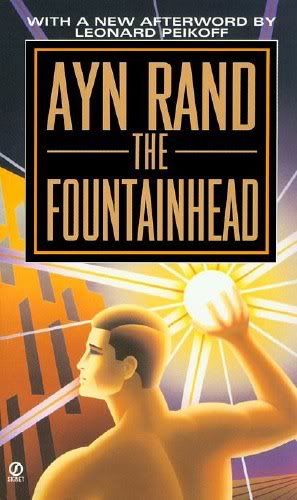 Rand famously wrote in The Fountainhead that civilization is "the march toward a society of privacy." She noted that the "savage's whole existence is public, ruled by the laws of his tribe." Thanks to capitalism, however, people can earn money and own private property, which affords freedom through seclusion. "Civilization," Rand concluded, "is the process of setting man free from men."
 Despite the ubiquity of McMansions, however, we're hardly the "society of privacy" that Rand envisioned. Indeed, the more technologically advanced we become, the less privacy we seem to enjoy. Some of this loss is involuntary, as when big government conducts electronic surveillance against our will. But an alarming amount is voluntary, like when we allow big business to collect our personal information electronically.
The ultra-modern offices of Sterling Cooper Draper Pryce are a perfect metaphor for this open society we now inhabit. The ubiquitous windows and thin walls mean that conversations are never truly private even when they happen behind closed doors. The place resembles Jeremy Bentham's panopticon, a prison where those incarcerated are always visible but never know whether they're actually being observed.
As Slate reader Mary Anne Mayo notes, the commentary on privacy was particularly evident this season in "The Rejected." When Don fights with Allison in his office, Peggy peeps at them over the wall. Later, Don watches an elderly gentleman ask his wife if she bought "the pears." She replies that they'll "discuss it inside" -- i.e., in private. The juxtaposition of these scenes underscored the loss of privacy at SCDP.
The point was driven home by the tragicomic sight of Bert Cooper eating an apple in the lobby. There was the firm's patriarch, his stockinged-feet up on a couch, munching away at fruit. It was an amusingly intimate act -- something I imagine Bert doing in his inner sanctum at the old offices -- performed in a very public space. What made it also poignant, verging on pathetic, was how nobody seemed to notice.
Bert may not be dead, but he's already a ghost, which is rather fitting when you think about it. His whole world is gone, along with his comfortable private office and its promise of seclusion. The old man is hopelessly out of place in the transparent new world of SCDP. He seems as quaint and outdated as notions of privacy must to members of the Facebook generation, who routinely over-share their personal information online.
Such commentary is particularly appropriate given the subject matter of the show. The whole point of advertising is to reveal and exploit consumers' sometimes hidden preferences. The show alludes to this with Dr. Faye Miller's surveys and scenes of focus groups observed from behind mirrored glass. Web cookies and social-networking sites are just more technologically-sophisticated means to the same end.
More generally, it's an economic axiom that markets operate most efficiently when participants have perfect information. Some libertarians, like federal judge Richard Posner, actually question the value of privacy as a social good on this basis. One needn't agree with them to get the point that, contrary to what Rand believed, capitalism and privacy aren't always complementary. Far from it.
And that leads me to a morbid speculation about what's in store for Bert. His aforementioned specter was a brilliant metaphor for the death of privacy, but I'm skeptical the show will leave it at that. I believe Bert is actually going to die before the season is done. He'll become what the late Roger Sterling, Sr. was to the old firm, making Roger Jr. the new Bert Cooper of SCDP.
Let's hope for Roger's sake he's not similarly a fan of Ayn Rand.
Tuesday, September 14, 2010
Mad Men: Thoughts on "The Summer Man"
A few thoughts on "The Summer Man," the most recent episode of Mad Men:
* Betty's lopsided cake when Henry came in shirtless was the perfect symbol that something is off in their relationship. It reminded me of when films use Dutch Angle shots to emphasize something is wrong.
* I thought Harry's interior decorating was confirmation he's NOT gay. That whole clumsy storyline, which felt like something recycled from Three's Company, was to show us that Joey is kind of a dick who deserved what he got.
* I disagree with the prevailing take on Joan's reaction to Peggy. I think Joan was actually rather accurate in her appraisal of the situation. I think their encounter was one of those moments where Weiner tweaks viewers for their moral superiority.
Peggy said she was an anthropologist -- i.e., an outsider. And she made the mistake of intervening in a culture where she didn't fully understand the norms. I know I was rooting for her throughout the episode. Then Joan set her -- and me -- straight.
* Have they ever ended an episode before with a simple fade to black, i.e., no music? My friend MB remarked that it was generally a quiet episode. Aside from The Stones, I can't think of any other music.
* Betty's lopsided cake when Henry came in shirtless was the perfect symbol that something is off in their relationship. It reminded me of when films use Dutch Angle shots to emphasize something is wrong.
* I thought Harry's interior decorating was confirmation he's NOT gay. That whole clumsy storyline, which felt like something recycled from Three's Company, was to show us that Joey is kind of a dick who deserved what he got.
* I disagree with the prevailing take on Joan's reaction to Peggy. I think Joan was actually rather accurate in her appraisal of the situation. I think their encounter was one of those moments where Weiner tweaks viewers for their moral superiority.
Peggy said she was an anthropologist -- i.e., an outsider. And she made the mistake of intervening in a culture where she didn't fully understand the norms. I know I was rooting for her throughout the episode. Then Joan set her -- and me -- straight.
* Have they ever ended an episode before with a simple fade to black, i.e., no music? My friend MB remarked that it was generally a quiet episode. Aside from The Stones, I can't think of any other music.
Tuesday, June 22, 2010
Doctor Who: Tangent Timeline
WARNING: SPOILERS FOR "PANDORICA OPENS"
In "Cold Blood," the Doctor explained that certain events represent "temporal tipping point[s]." How such a pivotal event plays out can "create its own timeline, its own reality." I believe that the Doctor's meeting with little Amelia Pond was such a tipping point. The Doctor was supposed to return to Amelia in five minutes, as he promised. His failure to do so created a whole new timeline, which we've witnessed over the whole course of this season.
Because this new timeline isn't supposed to exist, it's inherently unstable, which is why cracks keep opening in spacetime. The analogy here is to Donnie Darko, where the paradoxical appearance of a jet engine creates an unstable tangent timeline. Donnie must send the engine back into the primary universe before the tangent timeline collapses and destroys everything. As that analogy suggests, the Doctor must make good on his promise to little Amelia to save the universe.
But how can the Doctor do that when he's trapped in the Pandorica? According to this eagle eye, the Doctor has River Song's vortex manipulator:

My guess, therefore, is that the Doctor will somehow use this vortex manipulator to escape the Pandorica and travel back to the temporal tipping point. In so doing, he will reset events from that point forward so the tangent timeline ceases to exist, just like Donnie Darko.
In "Cold Blood," the Doctor explained that certain events represent "temporal tipping point[s]." How such a pivotal event plays out can "create its own timeline, its own reality." I believe that the Doctor's meeting with little Amelia Pond was such a tipping point. The Doctor was supposed to return to Amelia in five minutes, as he promised. His failure to do so created a whole new timeline, which we've witnessed over the whole course of this season.
Because this new timeline isn't supposed to exist, it's inherently unstable, which is why cracks keep opening in spacetime. The analogy here is to Donnie Darko, where the paradoxical appearance of a jet engine creates an unstable tangent timeline. Donnie must send the engine back into the primary universe before the tangent timeline collapses and destroys everything. As that analogy suggests, the Doctor must make good on his promise to little Amelia to save the universe.
But how can the Doctor do that when he's trapped in the Pandorica? According to this eagle eye, the Doctor has River Song's vortex manipulator:
My guess, therefore, is that the Doctor will somehow use this vortex manipulator to escape the Pandorica and travel back to the temporal tipping point. In so doing, he will reset events from that point forward so the tangent timeline ceases to exist, just like Donnie Darko.
Friday, April 2, 2010
Fringe: Whoah!
Four "whoas!" from Joey Lawrence for what what may be the best episode of Fringe thus far. I've been eagerly anticipating "Peter" ever since the first promos aired on FOX. In fact, I was probably even more excited to see this episode than the recently aired "Ab Aeterno" on LOST. And boy did Fringe deliver, starting with the teaser, which culminated in a brilliant retro credits sequence that made me laugh out loud with joy.
Most viewers, myself included, had already figured out the basics (i.e., that Walter stole Peter from the Mirror universe). So, the story contained few major revelations beyond, perhaps, the importance of Peter to the Observers. I think the purpose of this episode, however, was to help the audience sympathize with Walter's actions by seeing them in a more noble light (no pun intended). The writers did a wonderful job in that regard, portraying Walter as an overzealous, but ultimately well intentioned, prisoner of circumstance. The real credit, though, goes to John Noble, whose performance was just perfect. If that man doesn't win an Emmy for this, the whole freakin' system is out of order.
Fringe has certainly had its ups and downs as a show. When it's on, however, it manages to hit notes that others only dream of. Think back to the Season 1 finale, when we zoomed out of William Bell's office to see the World Trade Center Towers still standing. Speaking of Belly, I've got a whackadoo speculation about the mysterious founder of Massive Dynamic. Remember how Walter mentioned that Bell urged him to take the risk of visiting the mirror universe? I think Bell already did just that, which is why he was absent from this episode. Walter believes he's responsible for breaking the barrier between universes, but I suspect we're going to learn it was actually Belly who did the dirty deed.
Most viewers, myself included, had already figured out the basics (i.e., that Walter stole Peter from the Mirror universe). So, the story contained few major revelations beyond, perhaps, the importance of Peter to the Observers. I think the purpose of this episode, however, was to help the audience sympathize with Walter's actions by seeing them in a more noble light (no pun intended). The writers did a wonderful job in that regard, portraying Walter as an overzealous, but ultimately well intentioned, prisoner of circumstance. The real credit, though, goes to John Noble, whose performance was just perfect. If that man doesn't win an Emmy for this, the whole freakin' system is out of order.
Fringe has certainly had its ups and downs as a show. When it's on, however, it manages to hit notes that others only dream of. Think back to the Season 1 finale, when we zoomed out of William Bell's office to see the World Trade Center Towers still standing. Speaking of Belly, I've got a whackadoo speculation about the mysterious founder of Massive Dynamic. Remember how Walter mentioned that Bell urged him to take the risk of visiting the mirror universe? I think Bell already did just that, which is why he was absent from this episode. Walter believes he's responsible for breaking the barrier between universes, but I suspect we're going to learn it was actually Belly who did the dirty deed.
Saturday, January 23, 2010
Caprica and Human Target: In the Shadow of BSG
Two new shows reflect the influence of the rebooted Battlestar Galactica in different ways. One is great, the other merely good, but both are surprisingly watchable. Let's start with the great: Caprica airs on SyFy and is expressly intended as a prequel to Battlestar Galactica. The action takes place 58 years before the 12 Colonies are nuked. We see the Cylons' creation and rise through the eyes of two families, the Graystones and the Adamas (yes, those Adamas) who meet under tragic circumstances.
A terrorist bombing claims the daughter of Daniel Graystone (Eric Stoltz) and the wife and daughter of Joseph Adama (Esai Morales). The two men bond through their grief initially, then over love for the game Pyramid, which is the international pastime of Caprica. But this budding friendship gets nipped when Graystone, the inventor of the Cylons, finds a way to recreate their daughters using the downloading technology the Cylons will eventually use to resurrect themselves.

At first, Adama is tempted by Graystone's plan and allows a virtual avatar of his daughter to be created. But he turns against the project upon meeting her in a disturbing scene that's strong sauce thanks to Morales's acting. His daughter is somehow incomplete -- far less fully realized than Zoe Graystone's avatar (Alessandra Torresani) who was designed by the teen Graystone herself before dying. It turns out she was an even better programmer than her father, unbeknownst to her folks.

The Graystone's are also shocked to discover that Zoe had ties to the Soldiers of the One, the monotheistic religious cult that mounted the terrorist attack. I had mixed feelings about the scenes of religious fanaticism by Zoe and her friends. They struck me as a little over the top, but I suppose that was the point -- teens have a tendency to take things to the extreme. The revelation of their apparent cell leader was a nice twist, one I saw coming but enjoyed nevertheless.
The sectarian tension between the monotheistic cultists and the polytheistic Colonials serves as a backdrop for two of creator Ronald D. Moore's favorite things: social commentary and messianic intrigue. The technologically enhanced decadence of Caprica presents a much wider lens through which to examine our own moral and political conflicts than Battlestar Galactica did. And I'm fascinated by hints that the monotheists have a plan for Zoe's avatar, who I suspect will emerge as a messiah figure like in Carnivale, another Moore series about avatars.
But Caprica is at its best when confronting the ethical dilemmas raised by Daniel's experiments in resurrection and artificial intelligence. Questions of mortality have consumed me since I was a child, and the possibility of extending life by downloading one's consciousness preoccupies me as an adult. I'm also intrigued that Caprica seems to have taken a page from Robert Sawyer (author of Mindscan, which touches upon similar themes) and linked the development of "strong" artificial intelligence to the copying of human consciousness into electronic form.
All of this adds up to a much different and deeper show than I'd expected. The previews made Caprica look like a prime time soap opera about warring family dynasties. (It's the Graystones versus the Adamas, two households both alike in dignity!) I'm sure the conflict between Daniel and Joseph will undoubtedly be central -- all the moreso when Adama discovers Zoe's terrorist ties. But at least its source isn't some romantic cliche about star-crossed lovers, like I'd feared. Let's just hope subsequent episodes live up to the undeniable promise of the Pilot.
***
Another show that exceeded my expectations, albeit by far less, is Human Target on FOX. Here again we see the fingerprints of Battestar Galactica, though in the casting rather than the plot. In the first two episodes, the guest stars have included Tricia Helfer and Alessandro Juliani, both of whom were regulars on Battlestar Galactica. But that's really where the comparison between the two series end. Human Target has no philosophical ambitions or pretenses -- it's cartoon action from start to finish.
The protagonist is Christopher Chance (Mark Valley) who offers protection for those whose lives have been threatened. He invents personae that keep him close to his clients, becoming their human shield until he can neutralize the threat. In the original DC comic (and short-lived '90s adaptation starring Rick Springfield) Chance actually used makeup to impersonate his clients, raising questions about existence and identity. The 2010 version understandably dispenses with this cumbersome plot device, but sacrifices intellectual depth in the bargain.

The strength of this Human Target is clearly Chance's "Scooby gang," which includes Winston (Chi McBride) and Guerrero (Jackie Earle Haley). I've been a fan of McBride since Boston Public. He has one note -- exasperated -- but it's a good one. Haley's range as an actor is the real surprise. He plays a far more nebbishy (but no less dangerous) character than he did as Rorschach in Watchmen. Both men have nice chemistry with each other and with Valley, who himself exudes a calm, assertive charisma in the role of Chance.

The action sequences are a little over the top, though no moreso than a Bond film. But they do underscore one potential source of concern: the formulaic character of the show. The first two episodes featured action sequences on a train and plane, respectively. If a third climaxes in some showdown aboard an automobile -- e.g., a speeding bus -- we'll know we're in trouble. Until then, however, I'll be watching. Sometimes, even bigmouths need a little mindless fun.
As always, you're welcome to post anonymously, but please identify yourself somehow, so I can distinguish between anonymous posters. Thanks!
A terrorist bombing claims the daughter of Daniel Graystone (Eric Stoltz) and the wife and daughter of Joseph Adama (Esai Morales). The two men bond through their grief initially, then over love for the game Pyramid, which is the international pastime of Caprica. But this budding friendship gets nipped when Graystone, the inventor of the Cylons, finds a way to recreate their daughters using the downloading technology the Cylons will eventually use to resurrect themselves.
At first, Adama is tempted by Graystone's plan and allows a virtual avatar of his daughter to be created. But he turns against the project upon meeting her in a disturbing scene that's strong sauce thanks to Morales's acting. His daughter is somehow incomplete -- far less fully realized than Zoe Graystone's avatar (Alessandra Torresani) who was designed by the teen Graystone herself before dying. It turns out she was an even better programmer than her father, unbeknownst to her folks.
The Graystone's are also shocked to discover that Zoe had ties to the Soldiers of the One, the monotheistic religious cult that mounted the terrorist attack. I had mixed feelings about the scenes of religious fanaticism by Zoe and her friends. They struck me as a little over the top, but I suppose that was the point -- teens have a tendency to take things to the extreme. The revelation of their apparent cell leader was a nice twist, one I saw coming but enjoyed nevertheless.
The sectarian tension between the monotheistic cultists and the polytheistic Colonials serves as a backdrop for two of creator Ronald D. Moore's favorite things: social commentary and messianic intrigue. The technologically enhanced decadence of Caprica presents a much wider lens through which to examine our own moral and political conflicts than Battlestar Galactica did. And I'm fascinated by hints that the monotheists have a plan for Zoe's avatar, who I suspect will emerge as a messiah figure like in Carnivale, another Moore series about avatars.
But Caprica is at its best when confronting the ethical dilemmas raised by Daniel's experiments in resurrection and artificial intelligence. Questions of mortality have consumed me since I was a child, and the possibility of extending life by downloading one's consciousness preoccupies me as an adult. I'm also intrigued that Caprica seems to have taken a page from Robert Sawyer (author of Mindscan, which touches upon similar themes) and linked the development of "strong" artificial intelligence to the copying of human consciousness into electronic form.
All of this adds up to a much different and deeper show than I'd expected. The previews made Caprica look like a prime time soap opera about warring family dynasties. (It's the Graystones versus the Adamas, two households both alike in dignity!) I'm sure the conflict between Daniel and Joseph will undoubtedly be central -- all the moreso when Adama discovers Zoe's terrorist ties. But at least its source isn't some romantic cliche about star-crossed lovers, like I'd feared. Let's just hope subsequent episodes live up to the undeniable promise of the Pilot.
***
Another show that exceeded my expectations, albeit by far less, is Human Target on FOX. Here again we see the fingerprints of Battestar Galactica, though in the casting rather than the plot. In the first two episodes, the guest stars have included Tricia Helfer and Alessandro Juliani, both of whom were regulars on Battlestar Galactica. But that's really where the comparison between the two series end. Human Target has no philosophical ambitions or pretenses -- it's cartoon action from start to finish.
The protagonist is Christopher Chance (Mark Valley) who offers protection for those whose lives have been threatened. He invents personae that keep him close to his clients, becoming their human shield until he can neutralize the threat. In the original DC comic (and short-lived '90s adaptation starring Rick Springfield) Chance actually used makeup to impersonate his clients, raising questions about existence and identity. The 2010 version understandably dispenses with this cumbersome plot device, but sacrifices intellectual depth in the bargain.
The strength of this Human Target is clearly Chance's "Scooby gang," which includes Winston (Chi McBride) and Guerrero (Jackie Earle Haley). I've been a fan of McBride since Boston Public. He has one note -- exasperated -- but it's a good one. Haley's range as an actor is the real surprise. He plays a far more nebbishy (but no less dangerous) character than he did as Rorschach in Watchmen. Both men have nice chemistry with each other and with Valley, who himself exudes a calm, assertive charisma in the role of Chance.
The action sequences are a little over the top, though no moreso than a Bond film. But they do underscore one potential source of concern: the formulaic character of the show. The first two episodes featured action sequences on a train and plane, respectively. If a third climaxes in some showdown aboard an automobile -- e.g., a speeding bus -- we'll know we're in trouble. Until then, however, I'll be watching. Sometimes, even bigmouths need a little mindless fun.
As always, you're welcome to post anonymously, but please identify yourself somehow, so I can distinguish between anonymous posters. Thanks!
Monday, January 18, 2010
The Jay Leno Show: Leno Gets PWNED
In case you missed it, here's the hilarious and riveting clip of Jimmy Kimmel unloading repeatedly on Jay Leno during the "10 at 10" segment of Leno's own show.
Kimmel is relentless -- and understandably so. I'm not sure what Jay was thinking having him as a guest. Jimmy is a close friend of Howard Stern, who has never forgiven Leno for going behind his back to poach Stuttering John Melendez from the Stern Show.
Speaking of Howard, his powers of prognostication have again been vindicated. When NBC announced that Conan O'Brien would be taking over the Tonight Show, Stern said it was a bad idea and advised O'Brien to stay at 12:30. When the Jay Leno show premiered, Howard warned it would fail and NBC would be forced to give the Tonight Show back to Jay. Both predictions have now come to pass.
This all comes on the heels of Stern's eerily accurate estimate that the new Star Trek film would gross $79 million during its opening weekend. Howard's moniker "King of All Media" is meant to be humorously self-deprecating. But the man sure seems to be Nostradamus where radio, television, and film are concerned.
Kimmel is relentless -- and understandably so. I'm not sure what Jay was thinking having him as a guest. Jimmy is a close friend of Howard Stern, who has never forgiven Leno for going behind his back to poach Stuttering John Melendez from the Stern Show.
Speaking of Howard, his powers of prognostication have again been vindicated. When NBC announced that Conan O'Brien would be taking over the Tonight Show, Stern said it was a bad idea and advised O'Brien to stay at 12:30. When the Jay Leno show premiered, Howard warned it would fail and NBC would be forced to give the Tonight Show back to Jay. Both predictions have now come to pass.
This all comes on the heels of Stern's eerily accurate estimate that the new Star Trek film would gross $79 million during its opening weekend. Howard's moniker "King of All Media" is meant to be humorously self-deprecating. But the man sure seems to be Nostradamus where radio, television, and film are concerned.
Subscribe to:
Posts (Atom)