
A few thoughts on "Chinese Wall," the most recent episode of Mad Men:
* The cut from Don and Megan to Roger and Jane brilliantly reinforced the notion that Don is morphing into Roger.
* The speeches about how much David Montgomery loved his daughter were a poignant reminder that Don and Pete have daughters of their own. Both men seemed disturbed by Montgomery's decision to prioritize work over family and substitute meaningless trinkets for genuine expressions of his love. Let's hope they don't make the same mistake.
* On a related note: David Montgomery is a well-known professor of labor history at Yale. Was his sad story of neglect a subtle commentary on what capitalism does to families?
* I'm glad to see Peggy and Abe get together. Something about his naive earnestness rings true to me, and I like the contrast between Peggy's capitalism and Abe's left-wing critique of her worldview. We've seen this tension before in the relationship between Don and Midge, the artist. I think this is further confirmation that Peggy is morphing into Don.
* Peggy's calm reaction to the lipstick on her teeth proved to the boys she wasn't a "humorless bitch," as Joan put it.
Tuesday, October 5, 2010

Friday, October 1, 2010
Fringe: Two Doomsday Devices?
In last night's episode, Agent Broyles wondered why pieces of Walternate's Doomsday Device are in our world. Later, we saw Bolivia communicate to her superiors in the alt-world that Peter was "engaged" and that he'd found the "first piece."
That raises an interesting question. Are there two doomsday devices? Perhaps Walternate knows this and is manipulating Peter to destroy our version before we can build it.
I like this possibility because it sets up an interesting dilemma for Peter. If there are two devices, each with the ability to destroy the other universe, then Peter gets to choose which universe survives.
Is that why he's so important to the Observers?
That raises an interesting question. Are there two doomsday devices? Perhaps Walternate knows this and is manipulating Peter to destroy our version before we can build it.
I like this possibility because it sets up an interesting dilemma for Peter. If there are two devices, each with the ability to destroy the other universe, then Peter gets to choose which universe survives.
Is that why he's so important to the Observers?
Monday, September 27, 2010
Mad Men: Thoughts on "Hands and Knees"
A few thoughts on "Hands and Knees," the most recent episode of Mad Men:
* As I suspected, Don has NOT turned any corner. His swimming and journal writing was false hope right before things get even worse.
* As I also suspected, Don will marry Megan. Weiner could be messing with us, but the Beatles tickets seem kind of pointless otherwise. I think the point was clearly to set up Megan's relationship with Don.
* Dr. Faye is morphing into Anna Draper. Heck Faye even LOOKS a little like Anna. Along those lines, I think Don's telling her his secret is the beginning of the end of their sexual relationship.
* I think Joan didn't have the abortion. I believe she'll have the baby, and if Dr. Greg returns from Vietnam, she'll say it's his.
* Peggy and Pete's secret baby could come into play this season. Let's say the loss of Lucky Strike forces SCDP to go back to North American Aviation. Pete might threaten to reveal Don's past if he doesn't leave the firm. Peggy could save Don by threatening to tell Trudy about Pete's illegitimate child.
* As I suspected, Don has NOT turned any corner. His swimming and journal writing was false hope right before things get even worse.
* As I also suspected, Don will marry Megan. Weiner could be messing with us, but the Beatles tickets seem kind of pointless otherwise. I think the point was clearly to set up Megan's relationship with Don.
* Dr. Faye is morphing into Anna Draper. Heck Faye even LOOKS a little like Anna. Along those lines, I think Don's telling her his secret is the beginning of the end of their sexual relationship.
* I think Joan didn't have the abortion. I believe she'll have the baby, and if Dr. Greg returns from Vietnam, she'll say it's his.
* Peggy and Pete's secret baby could come into play this season. Let's say the loss of Lucky Strike forces SCDP to go back to North American Aviation. Pete might threaten to reveal Don's past if he doesn't leave the firm. Peggy could save Don by threatening to tell Trudy about Pete's illegitimate child.
Wednesday, September 15, 2010
Mad Men: Deconstructing Ayn Rand
It's no secret that Bert Cooper is a fan of Ayn Rand. He recommends her books to Don Draper and Pete Campbell, and even hints that he knows her personally. Some take these references, along with the generally pro-business themes of Mad Men, as endorsement of Rand's views. If anything, however, Season 4 has challenged and deconstructed Rand's connection between capitalism and privacy.
 Rand famously wrote in The Fountainhead that civilization is "the march toward a society of privacy." She noted that the "savage's whole existence is public, ruled by the laws of his tribe." Thanks to capitalism, however, people can earn money and own private property, which affords freedom through seclusion. "Civilization," Rand concluded, "is the process of setting man free from men."
Despite the ubiquity of McMansions, however, we're hardly the "society of privacy" that Rand envisioned. Indeed, the more technologically advanced we become, the less privacy we seem to enjoy. Some of this loss is involuntary, as when big government conducts electronic surveillance against our will. But an alarming amount is voluntary, like when we allow big business to collect our personal information electronically.
The ultra-modern offices of Sterling Cooper Draper Pryce are a perfect metaphor for this open society we now inhabit. The ubiquitous windows and thin walls mean that conversations are never truly private even when they happen behind closed doors. The place resembles Jeremy Bentham's panopticon, a prison where those incarcerated are always visible but never know whether they're actually being observed.
As Slate reader Mary Anne Mayo notes, the commentary on privacy was particularly evident this season in "The Rejected." When Don fights with Allison in his office, Peggy peeps at them over the wall. Later, Don watches an elderly gentleman ask his wife if she bought "the pears." She replies that they'll "discuss it inside" -- i.e., in private. The juxtaposition of these scenes underscored the loss of privacy at SCDP.
The point was driven home by the tragicomic sight of Bert Cooper eating an apple in the lobby. There was the firm's patriarch, his stockinged-feet up on a couch, munching away at fruit. It was an amusingly intimate act -- something I imagine Bert doing in his inner sanctum at the old offices -- performed in a very public space. What made it also poignant, verging on pathetic, was how nobody seemed to notice.
Bert may not be dead, but he's already a ghost, which is rather fitting when you think about it. His whole world is gone, along with his comfortable private office and its promise of seclusion. The old man is hopelessly out of place in the transparent new world of SCDP. He seems as quaint and outdated as notions of privacy must to members of the Facebook generation, who routinely over-share their personal information online.
Such commentary is particularly appropriate given the subject matter of the show. The whole point of advertising is to reveal and exploit consumers' sometimes hidden preferences. The show alludes to this with Dr. Faye Miller's surveys and scenes of focus groups observed from behind mirrored glass. Web cookies and social-networking sites are just more technologically-sophisticated means to the same end.
More generally, it's an economic axiom that markets operate most efficiently when participants have perfect information. Some libertarians, like federal judge Richard Posner, actually question the value of privacy as a social good on this basis. One needn't agree with them to get the point that, contrary to what Rand believed, capitalism and privacy aren't always complementary. Far from it.
And that leads me to a morbid speculation about what's in store for Bert. His aforementioned specter was a brilliant metaphor for the death of privacy, but I'm skeptical the show will leave it at that. I believe Bert is actually going to die before the season is done. He'll become what the late Roger Sterling, Sr. was to the old firm, making Roger Jr. the new Bert Cooper of SCDP.
Let's hope for Roger's sake he's not similarly a fan of Ayn Rand.
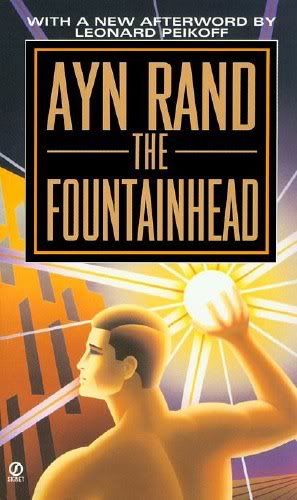 Rand famously wrote in The Fountainhead that civilization is "the march toward a society of privacy." She noted that the "savage's whole existence is public, ruled by the laws of his tribe." Thanks to capitalism, however, people can earn money and own private property, which affords freedom through seclusion. "Civilization," Rand concluded, "is the process of setting man free from men."
 Despite the ubiquity of McMansions, however, we're hardly the "society of privacy" that Rand envisioned. Indeed, the more technologically advanced we become, the less privacy we seem to enjoy. Some of this loss is involuntary, as when big government conducts electronic surveillance against our will. But an alarming amount is voluntary, like when we allow big business to collect our personal information electronically.
The ultra-modern offices of Sterling Cooper Draper Pryce are a perfect metaphor for this open society we now inhabit. The ubiquitous windows and thin walls mean that conversations are never truly private even when they happen behind closed doors. The place resembles Jeremy Bentham's panopticon, a prison where those incarcerated are always visible but never know whether they're actually being observed.
As Slate reader Mary Anne Mayo notes, the commentary on privacy was particularly evident this season in "The Rejected." When Don fights with Allison in his office, Peggy peeps at them over the wall. Later, Don watches an elderly gentleman ask his wife if she bought "the pears." She replies that they'll "discuss it inside" -- i.e., in private. The juxtaposition of these scenes underscored the loss of privacy at SCDP.
The point was driven home by the tragicomic sight of Bert Cooper eating an apple in the lobby. There was the firm's patriarch, his stockinged-feet up on a couch, munching away at fruit. It was an amusingly intimate act -- something I imagine Bert doing in his inner sanctum at the old offices -- performed in a very public space. What made it also poignant, verging on pathetic, was how nobody seemed to notice.
Bert may not be dead, but he's already a ghost, which is rather fitting when you think about it. His whole world is gone, along with his comfortable private office and its promise of seclusion. The old man is hopelessly out of place in the transparent new world of SCDP. He seems as quaint and outdated as notions of privacy must to members of the Facebook generation, who routinely over-share their personal information online.
Such commentary is particularly appropriate given the subject matter of the show. The whole point of advertising is to reveal and exploit consumers' sometimes hidden preferences. The show alludes to this with Dr. Faye Miller's surveys and scenes of focus groups observed from behind mirrored glass. Web cookies and social-networking sites are just more technologically-sophisticated means to the same end.
More generally, it's an economic axiom that markets operate most efficiently when participants have perfect information. Some libertarians, like federal judge Richard Posner, actually question the value of privacy as a social good on this basis. One needn't agree with them to get the point that, contrary to what Rand believed, capitalism and privacy aren't always complementary. Far from it.
And that leads me to a morbid speculation about what's in store for Bert. His aforementioned specter was a brilliant metaphor for the death of privacy, but I'm skeptical the show will leave it at that. I believe Bert is actually going to die before the season is done. He'll become what the late Roger Sterling, Sr. was to the old firm, making Roger Jr. the new Bert Cooper of SCDP.
Let's hope for Roger's sake he's not similarly a fan of Ayn Rand.
Tuesday, September 14, 2010
Mad Men: Thoughts on "The Summer Man"
A few thoughts on "The Summer Man," the most recent episode of Mad Men:
* Betty's lopsided cake when Henry came in shirtless was the perfect symbol that something is off in their relationship. It reminded me of when films use Dutch Angle shots to emphasize something is wrong.
* I thought Harry's interior decorating was confirmation he's NOT gay. That whole clumsy storyline, which felt like something recycled from Three's Company, was to show us that Joey is kind of a dick who deserved what he got.
* I disagree with the prevailing take on Joan's reaction to Peggy. I think Joan was actually rather accurate in her appraisal of the situation. I think their encounter was one of those moments where Weiner tweaks viewers for their moral superiority.
Peggy said she was an anthropologist -- i.e., an outsider. And she made the mistake of intervening in a culture where she didn't fully understand the norms. I know I was rooting for her throughout the episode. Then Joan set her -- and me -- straight.
* Have they ever ended an episode before with a simple fade to black, i.e., no music? My friend MB remarked that it was generally a quiet episode. Aside from The Stones, I can't think of any other music.
* Betty's lopsided cake when Henry came in shirtless was the perfect symbol that something is off in their relationship. It reminded me of when films use Dutch Angle shots to emphasize something is wrong.
* I thought Harry's interior decorating was confirmation he's NOT gay. That whole clumsy storyline, which felt like something recycled from Three's Company, was to show us that Joey is kind of a dick who deserved what he got.
* I disagree with the prevailing take on Joan's reaction to Peggy. I think Joan was actually rather accurate in her appraisal of the situation. I think their encounter was one of those moments where Weiner tweaks viewers for their moral superiority.
Peggy said she was an anthropologist -- i.e., an outsider. And she made the mistake of intervening in a culture where she didn't fully understand the norms. I know I was rooting for her throughout the episode. Then Joan set her -- and me -- straight.
* Have they ever ended an episode before with a simple fade to black, i.e., no music? My friend MB remarked that it was generally a quiet episode. Aside from The Stones, I can't think of any other music.
Tuesday, June 22, 2010
Doctor Who: Tangent Timeline
WARNING: SPOILERS FOR "PANDORICA OPENS"
In "Cold Blood," the Doctor explained that certain events represent "temporal tipping point[s]." How such a pivotal event plays out can "create its own timeline, its own reality." I believe that the Doctor's meeting with little Amelia Pond was such a tipping point. The Doctor was supposed to return to Amelia in five minutes, as he promised. His failure to do so created a whole new timeline, which we've witnessed over the whole course of this season.
Because this new timeline isn't supposed to exist, it's inherently unstable, which is why cracks keep opening in spacetime. The analogy here is to Donnie Darko, where the paradoxical appearance of a jet engine creates an unstable tangent timeline. Donnie must send the engine back into the primary universe before the tangent timeline collapses and destroys everything. As that analogy suggests, the Doctor must make good on his promise to little Amelia to save the universe.
But how can the Doctor do that when he's trapped in the Pandorica? According to this eagle eye, the Doctor has River Song's vortex manipulator:

My guess, therefore, is that the Doctor will somehow use this vortex manipulator to escape the Pandorica and travel back to the temporal tipping point. In so doing, he will reset events from that point forward so the tangent timeline ceases to exist, just like Donnie Darko.
In "Cold Blood," the Doctor explained that certain events represent "temporal tipping point[s]." How such a pivotal event plays out can "create its own timeline, its own reality." I believe that the Doctor's meeting with little Amelia Pond was such a tipping point. The Doctor was supposed to return to Amelia in five minutes, as he promised. His failure to do so created a whole new timeline, which we've witnessed over the whole course of this season.
Because this new timeline isn't supposed to exist, it's inherently unstable, which is why cracks keep opening in spacetime. The analogy here is to Donnie Darko, where the paradoxical appearance of a jet engine creates an unstable tangent timeline. Donnie must send the engine back into the primary universe before the tangent timeline collapses and destroys everything. As that analogy suggests, the Doctor must make good on his promise to little Amelia to save the universe.
But how can the Doctor do that when he's trapped in the Pandorica? According to this eagle eye, the Doctor has River Song's vortex manipulator:
My guess, therefore, is that the Doctor will somehow use this vortex manipulator to escape the Pandorica and travel back to the temporal tipping point. In so doing, he will reset events from that point forward so the tangent timeline ceases to exist, just like Donnie Darko.
Friday, April 2, 2010
Fringe: Whoah!
Four "whoas!" from Joey Lawrence for what what may be the best episode of Fringe thus far. I've been eagerly anticipating "Peter" ever since the first promos aired on FOX. In fact, I was probably even more excited to see this episode than the recently aired "Ab Aeterno" on LOST. And boy did Fringe deliver, starting with the teaser, which culminated in a brilliant retro credits sequence that made me laugh out loud with joy.
Most viewers, myself included, had already figured out the basics (i.e., that Walter stole Peter from the Mirror universe). So, the story contained few major revelations beyond, perhaps, the importance of Peter to the Observers. I think the purpose of this episode, however, was to help the audience sympathize with Walter's actions by seeing them in a more noble light (no pun intended). The writers did a wonderful job in that regard, portraying Walter as an overzealous, but ultimately well intentioned, prisoner of circumstance. The real credit, though, goes to John Noble, whose performance was just perfect. If that man doesn't win an Emmy for this, the whole freakin' system is out of order.
Fringe has certainly had its ups and downs as a show. When it's on, however, it manages to hit notes that others only dream of. Think back to the Season 1 finale, when we zoomed out of William Bell's office to see the World Trade Center Towers still standing. Speaking of Belly, I've got a whackadoo speculation about the mysterious founder of Massive Dynamic. Remember how Walter mentioned that Bell urged him to take the risk of visiting the mirror universe? I think Bell already did just that, which is why he was absent from this episode. Walter believes he's responsible for breaking the barrier between universes, but I suspect we're going to learn it was actually Belly who did the dirty deed.
Most viewers, myself included, had already figured out the basics (i.e., that Walter stole Peter from the Mirror universe). So, the story contained few major revelations beyond, perhaps, the importance of Peter to the Observers. I think the purpose of this episode, however, was to help the audience sympathize with Walter's actions by seeing them in a more noble light (no pun intended). The writers did a wonderful job in that regard, portraying Walter as an overzealous, but ultimately well intentioned, prisoner of circumstance. The real credit, though, goes to John Noble, whose performance was just perfect. If that man doesn't win an Emmy for this, the whole freakin' system is out of order.
Fringe has certainly had its ups and downs as a show. When it's on, however, it manages to hit notes that others only dream of. Think back to the Season 1 finale, when we zoomed out of William Bell's office to see the World Trade Center Towers still standing. Speaking of Belly, I've got a whackadoo speculation about the mysterious founder of Massive Dynamic. Remember how Walter mentioned that Bell urged him to take the risk of visiting the mirror universe? I think Bell already did just that, which is why he was absent from this episode. Walter believes he's responsible for breaking the barrier between universes, but I suspect we're going to learn it was actually Belly who did the dirty deed.
Subscribe to:
Posts (Atom)